Whole House Water Filtration Systems in Montgomery County, PA
A filter at the kitchen sink only helps the kitchen sink. Whole-house filtration treats your water where it enters the home, so every shower, tap, and appliance runs on water that's already been cleaned up.
Treat the Water Once, Get It Everywhere
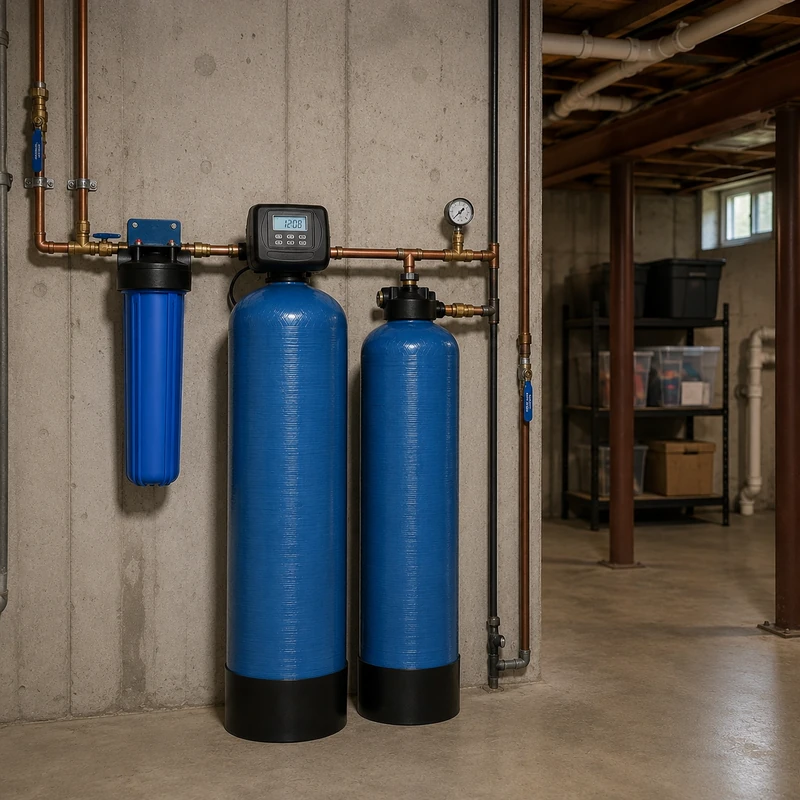
Whole-house systems sit on your main line and filter everything downstream. That means the shower you stand in, the water your washing machine uses, and the tap your kids fill their glasses from all get the same treatment.
- Cuts chlorine taste and odor at every fixture in the house
- Traps sediment and rust before it reaches fixtures and appliances
- Sized to your home's flow rate so pressure stays where it should
When the Problem Follows You Room to Room
Point-of-use filters are fine until you notice the same issue at every tap. These three are the ones that call for treating the whole house.
Smell at Every Tap
A chlorine or musty odor greets you in the shower and at the kitchen sink alike.
Grit in the Water
Sediment collects in aerators and the bottom of the water heater fills with silt.
Dingy Laundry
Whites come out gray and towels hold a smell no detergent seems to fix.
How We Design a Whole House System
Sizing matters more here than anywhere else. Too small and you lose pressure, too big and you paid for capacity you'll never use.
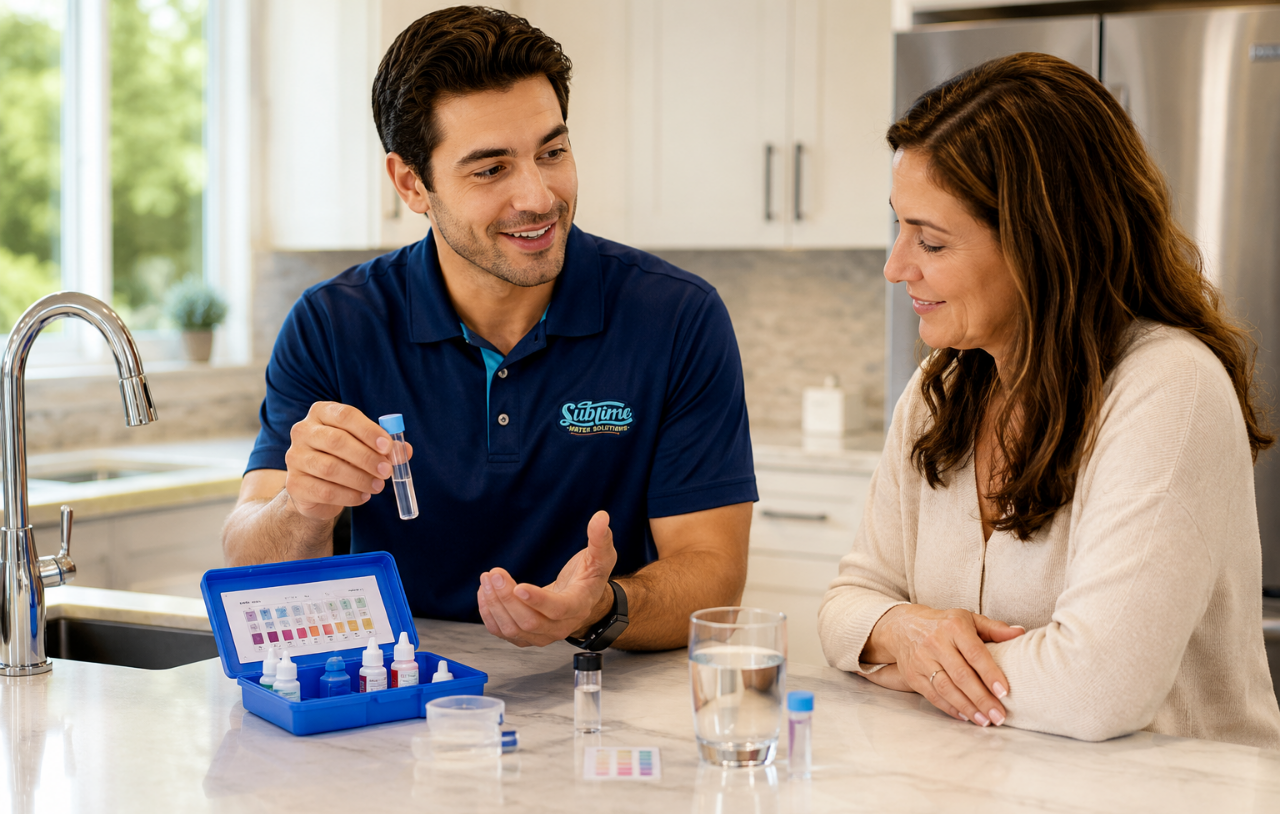
Free Water Test
We identify what's in your supply, from sediment to taste and odor issues.
Flow Rate Sizing
We match media volume to your peak demand so showers never lose pressure.
Main Line Install
We tie the system into your main line, fully insured, with bypass valves.
Media Service
We track media life and schedule changes before performance slips.
Serving Montgomery County & the Surrounding Areas
We proudly serve homeowners across Montgomery County and the surrounding areas. Wherever you are, you get the same careful testing, custom-fit systems, and personal service.
What Montgomery County Families Say About Their Water

"The free water test made all the difference. They identified contaminants we didn't even know were in our water and provided a perfect solution."
"Our hard water problem is gone! The water softener installation was seamless, and the staff explained everything clearly. Highly recommend!"
"I love that Sublime Water Solutions delivered soft water to our entire home. Skin and hair feel so much better, and our appliances are protected from scale."
"No pressure, no games, just honest advice about what my water actually needed."
Whole House Filtration Questions
Filtration covers a lot of ground, so here's what homeowners ask most when they're deciding between whole-house and point-of-use.
Whole-house systems generally land between $1,500 and $4,000 installed, and the spread comes down to media type, tank size, and how much plumbing work your main line needs. A basic carbon system for chlorine and taste sits at the lower end, while multi-stage setups handling sediment plus chemistry run higher. We quote the full number upfront, including labor, materials, and install day.
Sediment cartridges usually run three to six months, while carbon media in a tank-based system typically lasts three to five years before a rebed. Your water's actual load decides it more than the calendar does. We set your schedule at install based on your test results and flag it when a change is due.
Not if the system is sized correctly, which is the whole reason we measure your flow rate first. An undersized tank is the usual culprit behind pressure complaints after a filtration install. We size for your home's peak demand, not the average, so running two showers and the dishwasher still works.
They do different jobs. A softener removes hardness minerals but leaves chlorine, taste, odor, and sediment untouched. Filtration handles that side of the problem. Plenty of homes run both in sequence, and your water test tells us whether yours needs one or the pair.
Standard carbon filtration won't remove hardness, and it isn't the right tool for bacteria or for reliably hitting drinking-water targets on dissolved contaminants like PFAS. Those call for a softener, UV, or reverse osmosis respectively. We tell you plainly where filtration stops so you're not expecting it to do a job it can't.

Clean Water at Every Tap in the House
Book a free water test and we'll show you what your whole home is running on today. If filtration is the fix, you'll get a system sized to your house and a price before we start.